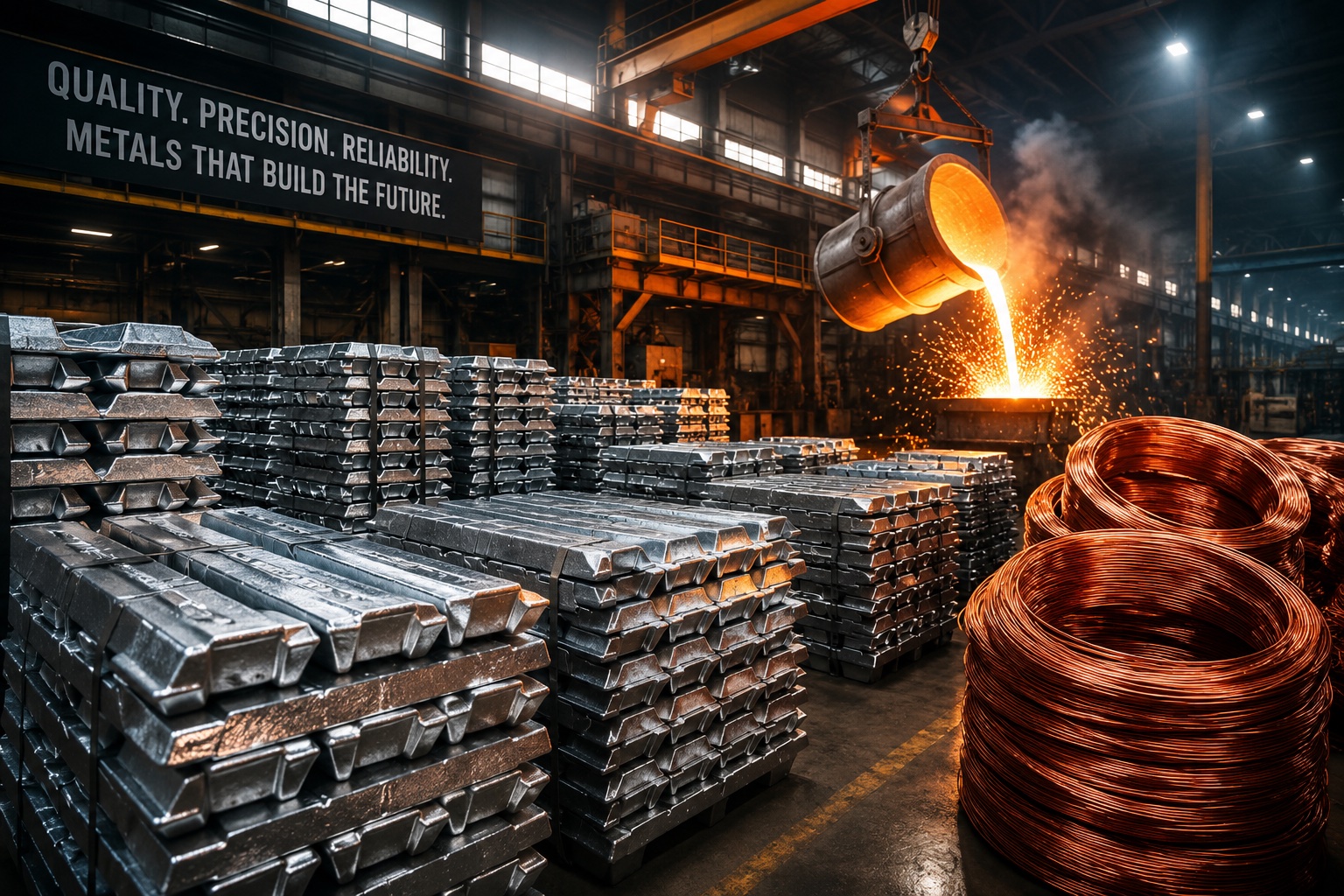
A rejected shipment costs more than the metal inside it. Demurrage, re-testing, replacement cargo, and a production line waiting on material it cannot use. Metal quality verification before export is the control that prevents most of those losses, and it is the one step buyers should never negotiate away.
MMA is an Egyptian company specializing in metal sourcing, quality assurance, and international export. Customers purchase directly from MMA, and MMA manages supplier selection, production planning, quality verification, export documentation, and international logistics. Our position is simple: we don't just supply metals. We source, verify, and deliver according to your specifications. Here is what that means before a single container is loaded.
Why small composition differences carry large consequences
Metal grades sit close together on paper and far apart in performance. Our recycled aluminum ingots run from Grade A at 99.0% minimum aluminum, used in electrical conductors and cable, through Grade B at 98.0% for profiles, cookware, and industrial applications, down to Grade C at 97.0% for foundries and general casting. Two percentage points separate conductor-grade material from general casting stock. Put the wrong one in an electrical application and it fails.
Copper is tighter still. Grade A 8 mm copper wire rod is 99.90% minimum copper, specified for electrical cable manufacturing. Grade D is 98.00% minimum, for general industrial applications. Less than two percentage points decide whether a rod can serve as cable conductor. Chemical composition verification is how a buyer knows which grade is actually in the container, rather than which grade is written on the invoice.
How pre-export verification works
Pre-export inspection for metals is not one event. It is a defined stage inside a defined process. At MMA, every order moves through seven stages: selecting the manufacturing partner, production planning, monitoring manufacturing progress, verifying product quality, confirming chemical composition, export documentation, and international logistics. The fourth and fifth stages form the gate. Here is what happens inside them.
Representative sampling
A test result is only as good as the sample behind it. Representative sampling means samples are drawn across the production lot, not pulled from a single convenient bundle or coil. The goal is a sample set that reflects the whole shipment, so a passing result means the lot passes, not just the piece that was tested. Buyers should ask any supplier how samples are selected. A vague answer is a warning.
Chemical composition confirmation
Samples are analyzed to confirm the actual chemistry of the lot against the agreed grade. For aluminum, that means verifying minimum aluminum content for the contracted grade, whether that is 99.0% Grade A or the 84-85% aluminum of our Automotive Alloy for automotive components and industrial castings. For custom manufacturing orders, where ingots and rods are produced to the customer's required chemical composition and technical specifications, results are checked against that exact recipe rather than a standard grade.
Compliance against agreed specifications
Chemistry is not the whole specification. Verification also confirms physical form and packing: 8 mm diameter on copper wire rod, steel coil packing, steel-strapped ingot bundles, export standard packaging, and correct container loading. The reference point is always the specification agreed in your contract, not a generic industry default. If you ordered custom packaging, compliance means your packaging, confirmed before shipment.
Documents a buyer should expect
Verification without paperwork is a verbal promise. Before shipment approval, a serious supplier can show you:
- A chemical analysis report tying test results to the specific production lot being shipped
- A quality verification record confirming compliance with the specifications agreed in your contract
- Packing documentation that matches the physical shipment: bundle or coil counts, weights, and marking
- Complete export documentation prepared for customs clearance at destination
Read every document against your purchase contract, not in isolation. A certificate that references the wrong grade, a different lot, or an unagreed standard tells you the verification step was decorative.
What "only approved products proceed to export" means in practice
The phrase appears on many supplier websites. Operationally, it means verification is a hold point, not a formality. At MMA, every shipment undergoes quality verification before export. Representative samples are inspected to confirm compliance with customer specifications before shipment approval. Material that passes is approved and released to export documentation and loading. Material that does not pass does not ship. There is no loading first and settling claims later.
The sequence is the whole point. Approval comes before the container closes. That ordering shifts quality risk away from the buyer, because non-conforming material is stopped in Egypt instead of being discovered at a port or on a factory floor thousands of kilometers away.
If you are sourcing recycled aluminum ingots, copper wire rod, or custom-manufactured material to your own chemical specification, put pre-export verification in the contract and demand the documents that prove it happened. Send your specification to sales@mmametal.com; our quote turnaround target is 48 hours. When you are ready, request a quote.